
Provide reliable and customized solutions to meet the specific needs of industries worldwide
Ferroalloy manufacturer
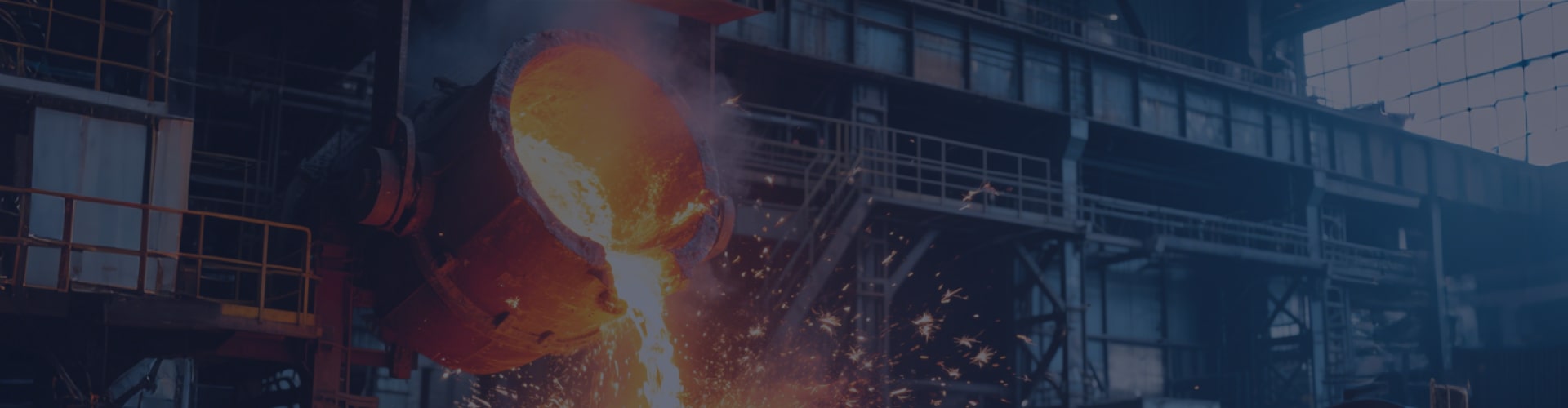
With the continuous development of modern steelmaking, secondary refining has become a decisive stage for producing clean steel, refined steel, and high-performance alloy grades. Compared with primary melting, secondary refining emphasizes accuracy, consistency, and metallurgical cleanliness.
From Hongshun’s long-term supply experience, Medium–Low Carbon Ferro Manganese has proven to be one of the most effective alloying materials for meeting these demanding requirements.
Secondary refining processes such as LF, VD/VOD, and RH are designed to achieve the following objectives:
Precise control of chemical composition
Deep deoxidation and desulfurization
Reduction of non-metallic inclusions
Temperature adjustment and composition homogenization
In these processes, alloy additions must be predictable, fast-reacting, and low in impurities, which places higher demands on ferro manganese quality.
1. Precise Control of Carbon Input
One of the most significant advantages of medium–low carbon ferro manganese in secondary refining is its well-controlled and predictable carbon content. Its use allows steelmakers to:
Effectively prevent unintended increases in molten steel carbon levels
Meet the stringent narrow-range carbon control requirements of high-quality and refined steel grades
Improve weldability and ensure greater stability of mechanical properties
By minimizing carbon variability, medium–low carbon ferro manganese supports consistent steel quality during final composition adjustment.
2. Stable and Predictable Manganese Recovery
Secondary refining places extremely high demands on the stability of alloy additions. Medium–low carbon ferro manganese is characterized by rapid dissolution, high reactivity, and reliable manganese yield.
Its consistent performance enables:
Stable and repeatable manganese recovery from heat to heat
Reduced alloying time during refining
Improved overall refining efficiency and process stability
As a result, medium–low carbon ferro manganese is particularly well suited for precision alloying in modern secondary refining operations.
1. Deoxidation Performance
After being added to molten steel, medium–low carbon ferro manganese reacts with dissolved oxygen to form stable oxides. These oxides help control the size and distribution of inclusions, resulting in cleaner and more homogeneous molten steel. The use of medium–low carbon ferro manganese ensures effective deoxidation while avoiding excessive carbon input, thereby maintaining stable steel properties.
2. Synergistic Desulfurization Effect
During ladle refining and vacuum refining processes, manganese acts synergistically with other elements to reduce sulfur activity and improve steel cleanliness. High-quality medium–low carbon ferro manganese features low sulfur content, preventing secondary contamination, while low phosphorus levels further contribute to maintaining molten steel purity. Hongshun strictly controls impurity levels such as phosphorus and sulfur during production, enabling medium–low carbon ferro manganese to significantly enhance metallurgical cleanliness and meet the stringent requirements of high-end steel grades.
3. Improvement of Overall Metallurgical Performance of Molten Steel
Medium–low carbon ferro manganese also contributes to improving the overall metallurgical performance of molten steel. Proper addition helps optimize the microstructure, enhancing steel strength, toughness, and surface quality. At the same time, uniform chemical composition supports stable hot and cold processing, reduces defects and production fluctuations, and provides reliable assurance for the production of high-grade steel products.
Element | Medium Carbon FeMn | Low Carbon FeMn |
Mn (%) | 75-85 | 80-90 |
C (%) | 0.8-1.5 | ≤ 0.5 |
Si (%) | ≤ 1.5 | ≤ 1.2 |
P (%) | ≤ 0.15 | ≤ 0.1 |
S (%) | ≤ 0.02 | ≤ 0.02 |
Consistent use of high-quality medium–low carbon ferro manganese contributes to:
1. Improved tensile strength and toughness
2. Better surface and internal quality
3. More uniform microstructure
4. Enhanced weldability and formability
These advantages are particularly important for automotive steel, engineering steel, and other high-end applications.
From Hongshun’s perspective, Medium–Low Carbon Ferro Manganese is not merely an alloying additive, but a process stabilizer in secondary refining. Its ability to combine precise carbon control with stable manganese recovery makes it an essential material for modern steelmaking.
By selecting well-controlled chemistry, low impurity levels, and suitable particle sizes, steelmakers can significantly improve refining efficiency and achieve consistent, high-quality steel production.