
Provide reliable and customized solutions to meet the specific needs of industries worldwide
Ferroalloy manufacturer
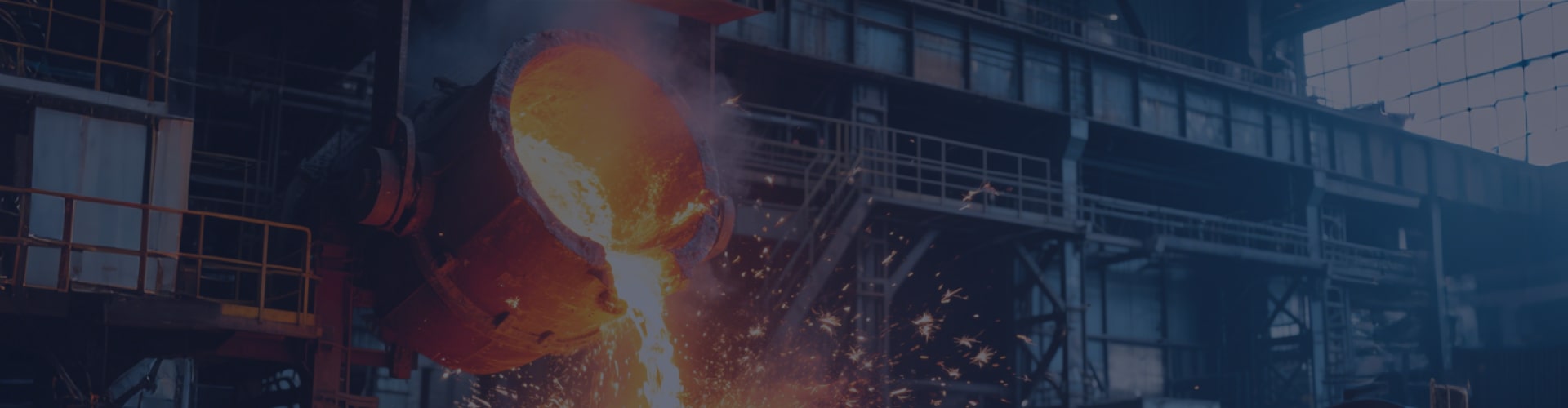
In steelmaking and foundry operations, silicon is a critical element used for deoxidation, alloying, and microstructure control. Among the available silicon-bearing materials, Ferro Silicon (FeSi) and Silicon Metal are the two most commonly used additives.
While both supply silicon to molten metal, their efficiency in real production depends on more than chemical purity alone. Based on practical metallurgical experience and long-term supply feedback, companies like Hongshun, with years of involvement in ferroalloy manufacturing and application support, observe clear differences between the two materials in daily operations.
Silicon plays several essential roles in metallurgical processes:
Acts as a strong deoxidizer, reducing dissolved oxygen
Improves strength, elasticity, and corrosion resistance
Promotes graphite formation in cast iron
Enhances melt fluidity and process stability
In practice, the efficiency of a silicon additive is determined by how consistently and predictably silicon is recovered, not just by its nominal silicon content.
Ferro Silicon is an iron–silicon alloy typically containing 45%–75% silicon, with iron acting as a carrier that improves dissolution behavior in molten metal. Common grades include FeSi 65, FeSi 72, and FeSi 75.
Based on Hongshun’s production practices and long-term customer application experience, well-controlled Ferro Silicon demonstrates stable chemical composition, predictable silicon recovery, and smooth dissolution, helping minimize furnace disturbance and support consistent metallurgical performance.
Typical Applications:
Deoxidation in carbon and alloy steel
Alloying additive in EAF and induction furnaces
Inoculant base material for foundry use
Silicon Metal contains 98%–99.9% elemental silicon and is produced through the carbothermic reduction of quartz. While it offers extremely high silicon purity, it lacks iron as a carrier element, which affects its behavior during addition. As a result, Silicon Metal exhibits very high silicon concentration, strong chemical reactivity, a higher melting point, and an increased risk of oxidation loss, requiring more precise control during metallurgical processing.
Typical Applications:
Aluminum alloy production
Chemical and photovoltaic industries
Special steel grades requiring minimal iron input
1. Silicon Recovery Rate
Despite its higher silicon content, Silicon Metal often suffers from greater oxidation losses during steelmaking, especially under less-than-ideal temperature or timing conditions.
Ferro Silicon generally provides more stable and repeatable recovery, which is why suppliers like Hongshun focus on composition control and particle size optimization to support consistent results across different furnaces.
2. Dissolution and Process Stability
Ferro Silicon dissolves gradually and evenly, helping to:
Avoid local overreaction
Reduce temperature fluctuation
Maintain smoother furnace operation
Silicon Metal requires stricter operational control and may increase the need for furnace adjustments.
3. Cost Efficiency in Real Production
True efficiency should be measured by cost per unit of recovered silicon, not by silicon percentage alone.
Aspect | Ferro Silicon | Silicon Metal |
Typical Si Content | 45%-75% | 98%-99.9% |
Silicon Recovery Stability | High | Medium to Low |
Oxidation Loss Risk | Lower | Higher |
Dissolution Behavior | Controlled and smooth | Aggressive |
Operational Sensitivity | Low | High |
Cost per Ton | Lower | Higher |
Cost per Recovered Si | Stable and predictable | Often higher |
Common Use | Steelmaking & foundry | Special alloys, non-ferrous |
Steelmaking Applications
For most carbon and alloy steel production, Ferro Silicon delivers higher overall efficiency, offering:
Stable silicon recovery
Lower operational risk
Better cost predictability
This is why many steel producers working with Hongshun prioritize process-adapted Ferro Silicon grades rather than chasing maximum silicon purity.
Foundry Applications
In foundry operations, Ferro Silicon remains the preferred choice due to its:
Positive influence on graphite formation
Compatibility with inoculation practices
Predictable metallurgical performance
Silicon Metal is rarely used due to its high reactivity and limited process tolerance.
Although silicon metal has a higher theoretical silicon content, ferrosilicon is often a more efficient silicon additive in steelmaking and foundry applications when overall recovery rate, process stability, and total cost are taken into account.
Choosing the right silicon source is not about which parameter "looks higher", but about whether it delivers stable, controllable, and sustainable performance in actual production.
As a professional ferroalloy manufacturer and supplier, Hongshun Industrial produces and supplies a wide range of ferrosilicon and silicon metal grades and specifications to meet different metallurgical process requirements.
Hongshun' s ferrosilicon products include commonly used grades such as FeSi65, FeSi72, and FeSi75. Silicon metal is available in standard grades such as 553 and 441, as well as high-purity silicon metal. Supported by a stable quality control system and flexible production capabilities, Hongshun helps customers select the most suitable silicon additive to achieve consistent, efficient, and reliable metallurgical performance.